Black Business Month:
Building on Our Terms, Together
Black Business Month gives us an opportunity to celebrate Black entrepreneurship, but celebration alone is not enough. It is also a time to listen, learn, invest, connect, and examine what it really takes to build businesses that are not only successful, but sustainable.
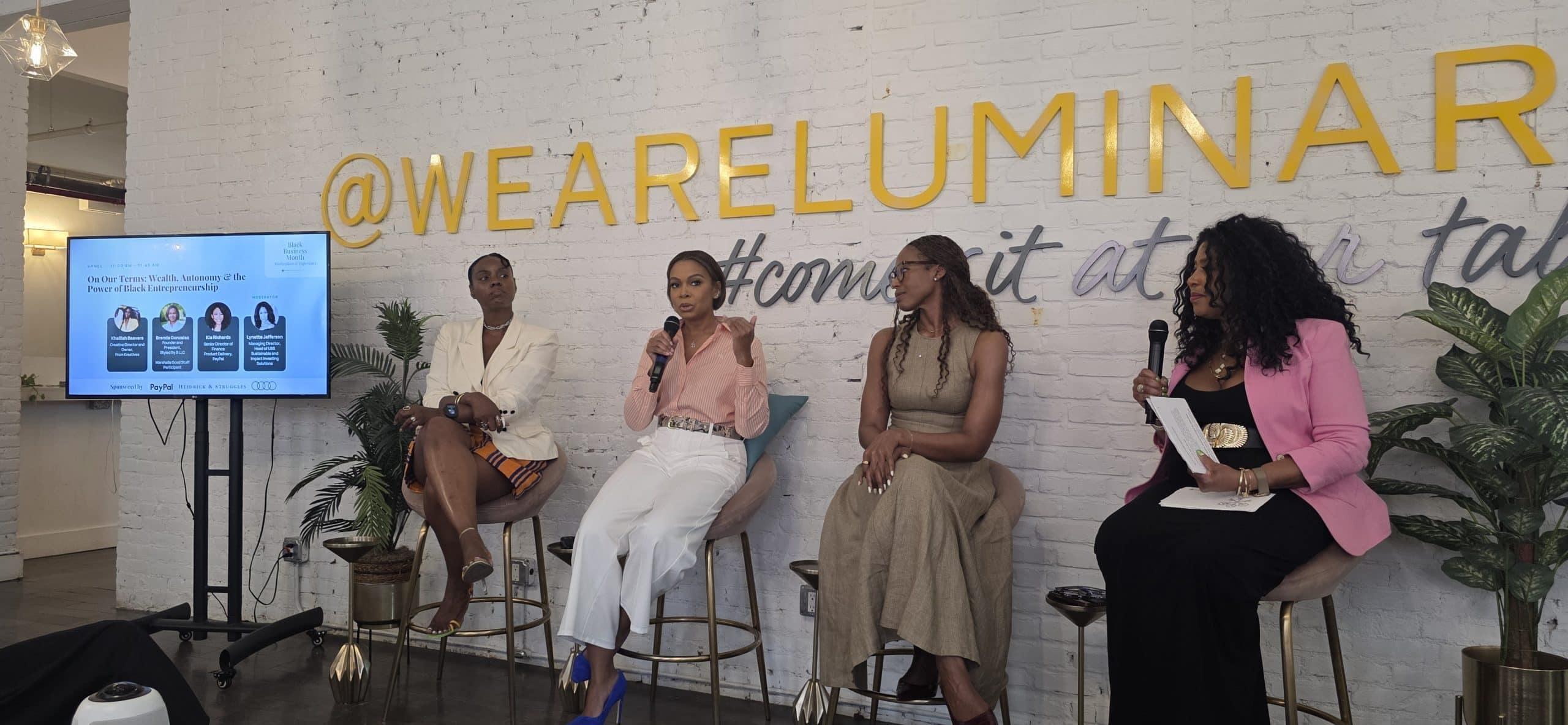
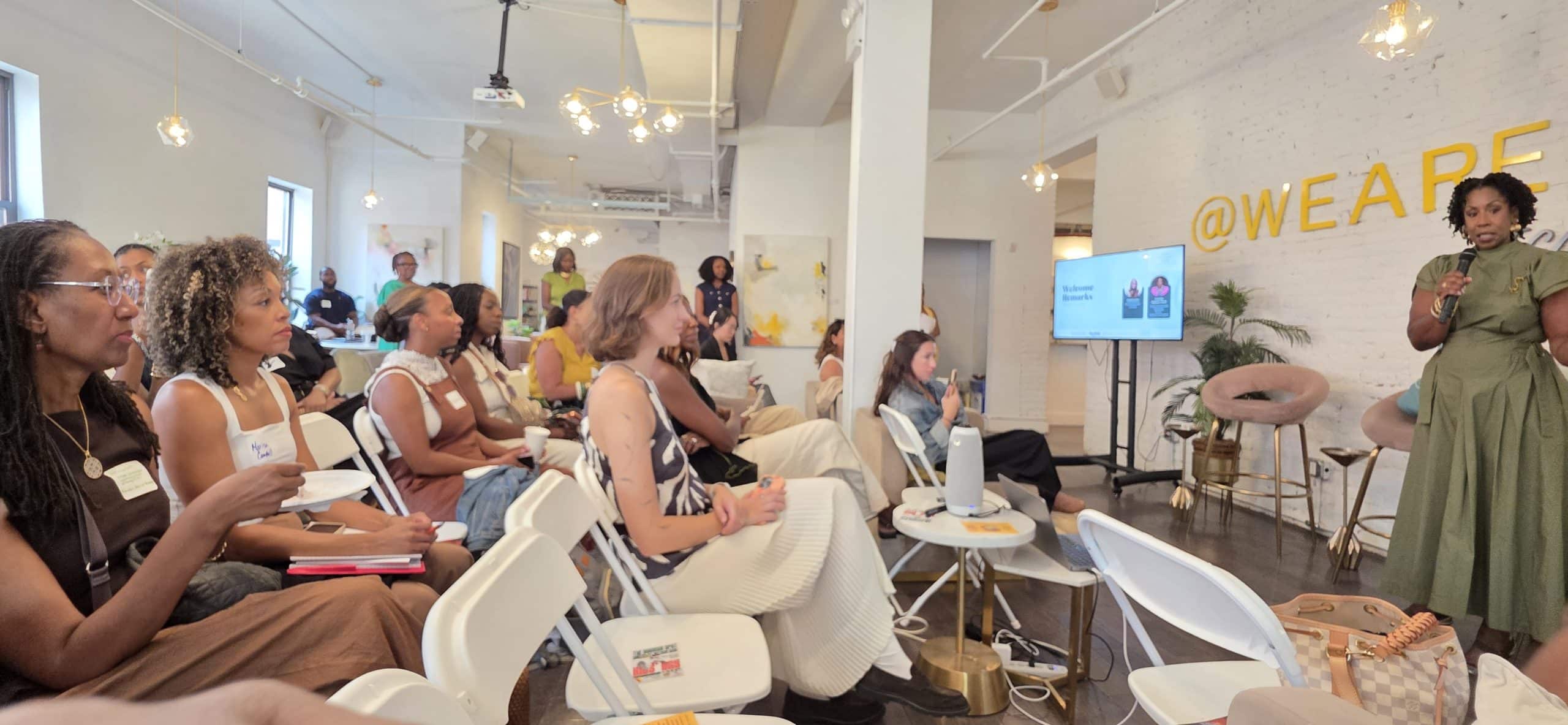
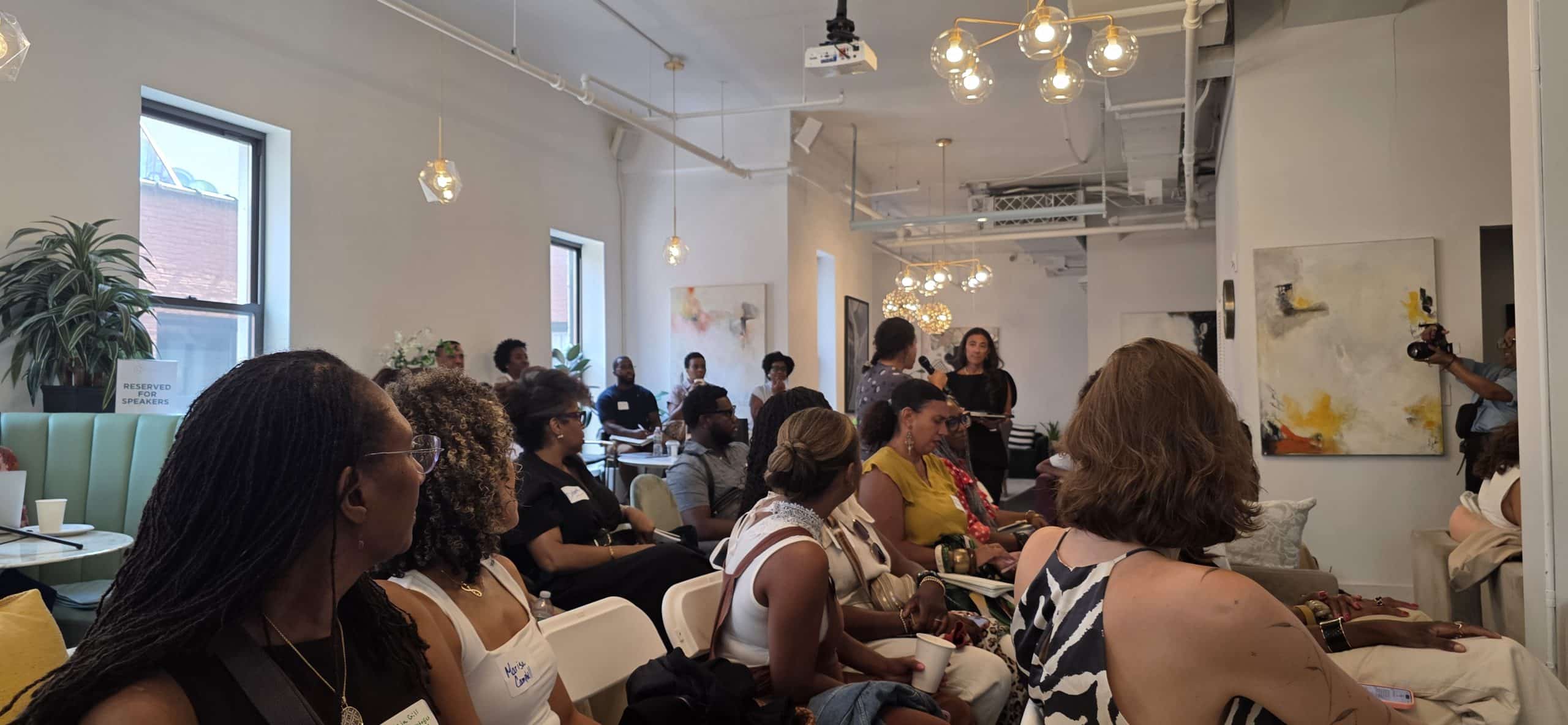
On August 12, WBEC NY DMV had the opportunity to attend Luminary's Black Business Month Experience, a full day of conversations, workshops, and networking focused on the realities facing Black entrepreneurs today.
Luminary, a WBENC-Certified WBEC NY DMV Strategic Partner founded and led by Cate Luzio, designed its Black Business Month programming as a two-day experience centered on connection, community, and Black-owned commerce. The August 12 Experience brought together founders, executives, investors, financial experts, attorneys, marketers, mental health professionals, and community leaders for conversations ranging from wealth and access to capital to burnout, intellectual property, visibility, and business growth. The following day extended that commitment through an in-person and virtual marketplace supporting Black-owned businesses.
That combination matters.
Luminary's broader mission is built around helping women and their allies advance, build skills, connect with others, and develop personally and professionally. Its model recognizes something entrepreneurs sometimes learn the difficult way: access is not only about getting into a room. It is about having the knowledge, relationships, resources, and community to know what to do once you get there.
Throughout the day, several themes stood out that have particular relevance for the WBEs in our network.
Growth Should Not Require Losing Yourself
One of the day's breakout sessions asked a deceptively simple question: How do you scale without losing your soul?
The conversation challenged the assumption that growth must automatically mean longer hours, greater sacrifice, and saying yes to every opportunity.
Paige Graham of Paige's Candle Co. spoke about working 60 to 70 hours a week before realizing she needed to "operationalize" not only her business, but her life. That meant creating protected time off, restructuring her schedule, and designing work around when she was most effective. Other panelists discussed defining success for themselves, protecting their values, and recognizing that bigger is not always the same thing as better.
The conversation also introduced a useful concept for entrepreneurs: know your walkaway price. What opportunity, customer, investor, or revenue would require you to compromise something fundamental about who you are or why you started?
Growth without a clear answer to that question can become expensive in ways that never appear on a financial statement.
Know Your Numbers, Not Just Your Revenue
For entrepreneurs, revenue can be seductive. It is visible. It sounds impressive. It makes a particularly cooperative social media graphic.
But revenue alone does not tell you whether your business is healthy.
During the Know Your Numbers workshop, the speakers challenged the belief that more revenue automatically solves financial problems. A business can generate substantial sales and still have poor cash flow or little profitability.
One example involved a product company generating approximately half a million dollars in revenue. When the economics of individual products were analyzed, roughly half of its SKUs were unprofitable. For service businesses, the same problem can appear through excessive time spent on clients, unbilled work, or scope creep.
The lesson for WBEs is straightforward: know what actually makes you money.
That means understanding profitability, cash flow, costs, margins, pricing, and the financial performance of individual products, services, or clients. It also means treating bookkeeping and financial reporting as management tools, not simply something to clean up before tax season.
As businesses grow, having the right financial professionals matters. But even with a bookkeeper, CPA, or fractional CFO, the owner still needs to understand the numbers well enough to make informed decisions.
Not Every Business Needs the Same Capital
The conversation Capital in Action: How Deals Actually Get Done offered another important reminder: raising capital is not simply about creating the perfect pitch deck.
Investors are evaluating fit.
At the earliest stages, there may be limited financial history available, so investors are often evaluating the size of the opportunity, the founder, the market, potential growth, and whether the business fits their investment model. Founders should be evaluating investors just as carefully.
The discussion emphasized understanding who you are approaching, what they invest in, whether they are actively deploying capital, and whether their model makes sense for your business. The speakers also acknowledged an important reality: after repeated investor conversations and feedback, a founder may determine that venture capital is simply not the right financing mechanism and pursue angels, private networks, friends and family, or other sources instead.
Capital should support the strategy of the business. The strategy should not be distorted simply to pursue capital.
Protect What You Are Building
Entrepreneurs spend enormous amounts of time developing names, products, content, processes, customer relationships, and brand equity.
Then, remarkably, we sometimes remember to protect those things only after someone else starts using them.
The Protect Your House intellectual property session provided a practical overview of copyrights, trade secrets, trademarks, and the responsibility businesses have to protect what they create.
The discussion also made clear that registering intellectual property is not always the end of the process. Trademark owners may have continuing maintenance and monitoring obligations, including ensuring that marks remain properly protected as the business expands into new products or services.
For growing WBEs, intellectual property should therefore be part of business planning, not merely a legal issue to address later.
Being Excellent Is Not Enough if Nobody Knows You Exist
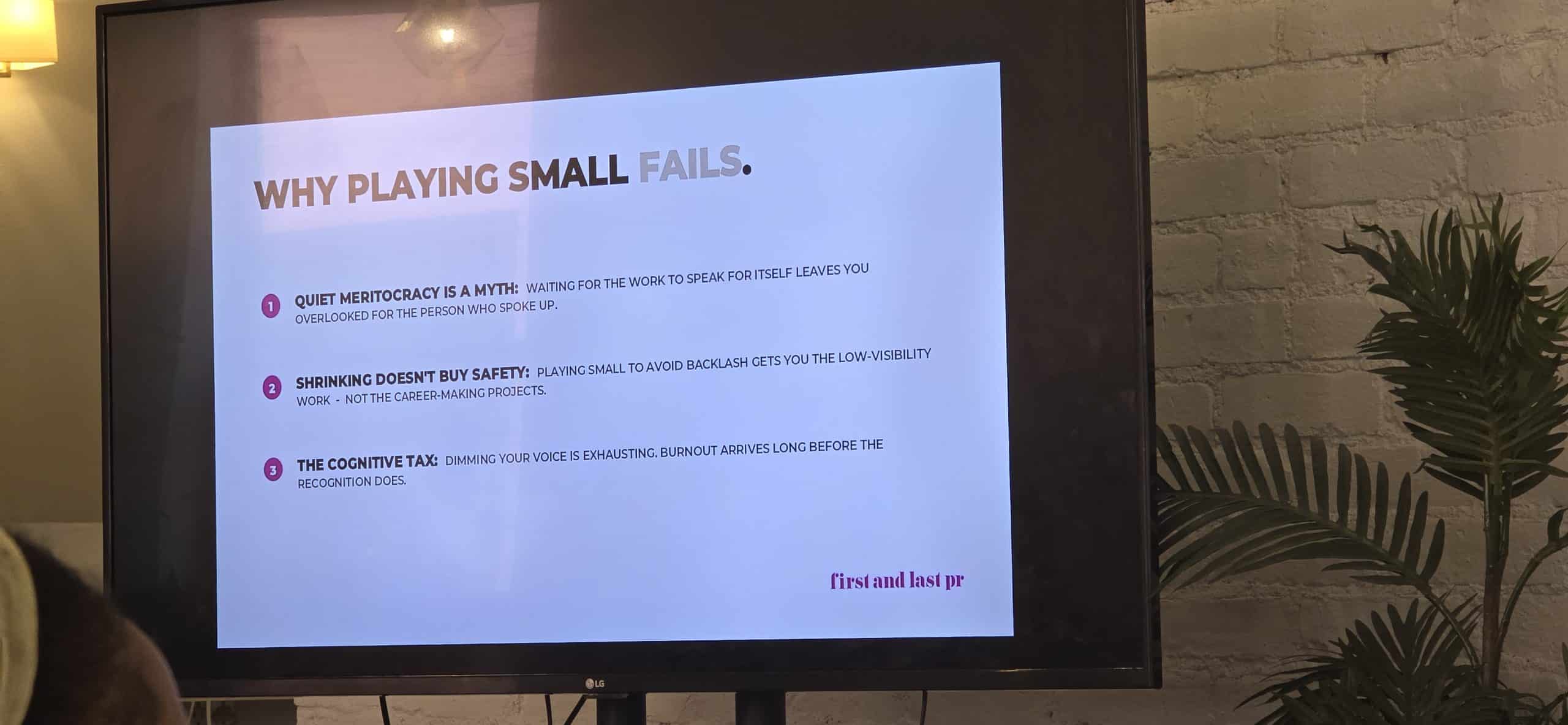
Another theme repeated throughout the day was visibility, including a session led by Stephanie Scott-Bradshaw, founder of First and Last PR and a WBEC NY DMV WBE Champion Circle member. In From Best-Kept Secret to Big Results: The Founder's Playbook for Winning Your Market, Stephanie challenged entrepreneurs to be intentional about what they want people to know about them and their businesses, reminding attendees that opportunities often flow through visibility, relationships, referrals, and reputation.
Founders can spend years becoming exceptionally good at what they do while assuming the quality of the work will eventually speak for itself.
Unfortunately, the work has apparently declined that assignment.
Cate Luzio captured the point particularly well: "It is not bragging if it's based on facts."
For WBEs, that is worth remembering.
Sharing a major contract, customer success, award, new capability, expansion, partnership, or measurable business result is not self-promotion for its own sake. It is evidence. Those facts help potential customers, partners, sponsors, and advocates understand what your company can actually do.
Visibility built on substance creates credibility.
Founder Well-Being Is a Business Issue
Perhaps one of the most important conversations of the day addressed something rarely included in traditional discussions about business growth: the physical, emotional, and mental cost of entrepreneurship.
The burnout discussion challenged the glorification of constant productivity and the expectation that entrepreneurs should always be capable of carrying more.
anelists talked about how financial pressure, fear, family responsibilities, identity, and societal expectations can reinforce overwork. They also discussed what happens when founders begin equating their self-worth with productivity and are rewarded for having few boundaries.
Burnout does not remain neatly confined to the founder. It affects judgment, leadership, relationships, creativity, client service, and ultimately the health of the business itself.
Rest, boundaries, delegation, community, and asking for help should therefore not be treated as rewards available only after success.
They are part of the infrastructure required to sustain it.
Community Is a Business Strategy
If there was one idea connecting nearly every conversation, it was the importance of community.
Speakers talked about relationships that led to customers, partnerships, mentorship, investment opportunities, knowledge, visibility, and access. They also challenged founders to reconsider the assumption that mentors must always be people significantly further ahead in their careers. Peer and lateral relationships can be equally valuable when entrepreneurs bring different areas of expertise and experience to the table.
The closing conversations pushed that idea further: businesses should look for opportunities to collaborate, share audiences, make introductions, and create opportunities for one another rather than assuming someone else's growth diminishes their own.
As one speaker summarized it: collaboration over competition.
That philosophy also reflects what makes organizations like Luminary valuable.
Luminary has deliberately built an ecosystem in which professionals, entrepreneurs, corporations, and organizations can connect across industries and career stages. During the event, Cate reflected on being advised early in Luminary's development to create an application process that would determine who belonged in the community. Her response was essentially to let people determine that for themselves, an approach rooted in inclusion rather than gatekeeping.
That commitment to access, connection, and collaboration is one of the reasons WBEC NY DMV values Luminary as a Strategic Partner.
From Celebration to Action
Black Business Month should absolutely celebrate the extraordinary contributions of Black-owned businesses and Black entrepreneurs.
But the most meaningful recognition is what happens next.
Support the business.
Make the introduction.
Share the opportunity.
Understand your numbers.
Protect your intellectual property.
Tell people what you have accomplished.
Build relationships before you need them.
Create boundaries that allow both you and your business to remain healthy.
And when you gain access to another room, consider who you can bring with you.
The closing keynote at Luminary was titled "We Are the Blueprint: A Charge to Lead, Build, and Protect Each Other."
That may also be one of the strongest messages to carry forward from this Black Business Month.
Entrepreneurship is often described as an individual journey. In practice, very little meaningful growth happens alone.
At WBEC NY DMV, we are proud to recognize Luminary, Cate Luzio, and the entrepreneurs, leaders, and experts who created a day grounded not simply in celebrating Black business, but in giving business owners practical tools, candid conversations, and stronger connections with which to build what comes next.